When I was in college, I took this really great public speaking course to help me speak to all the giant crowds I was certain I would one day amass once I became the mega-rockstar I was aspiring to be. Don’t judge me, that day could still come.
The professor, who eventually earned my admiration (but first, my terror), was a towering figure—over six feet, sporting a beard that could have its own zip code, and absolutely no patience for filler words. For those of us who relied on ‘um’ and ‘like’ as conversational crutches, the first few weeks felt like boot camp for the verbally clumsy.
If anyone dared to drop a ‘like,’ ‘umm,’ or ‘you know’ into the conversation, he’d smack his hand on the desk and boom the offending word back at you in a voice that could rattle windows. It was the kind of negative reinforcement that works—like learning not to touch a hot stove, but with more public humiliation and fewer burn marks.
He told us the reason he was so adamant about correcting the pattern was that filler words made a speaker sound unsure, as if they didn’t fully trust their own point. If you believed in what you were saying, he insisted, you would say it plainly, patiently, and stand behind it.
These days, his lessons are the soundtrack to my reality, because filler words have gone so mainstream they’re basically the background noise of modern conversation. Podcasts? Check. News interviews? Absolutely. Reality TV, meetings, panels—everyone’s doing it. Brilliant people, successful people, people who could probably recite the periodic table backward—they all sprinkle in a little ‘umm’ seasoning.
Was the professor right?
Are we using more filler words because we genuinely feel less confident in what we’re saying?
Or do we simply sound less confident after adapting to environments where a pause for thought serves as an invitation for someone else to take over?
All Of Us Trying To Merge Into The Same Lane
Just yesterday, in the sacred ritual known as the Monday morning meeting, I was mid-explanation about my font size choice for a campaign when my brain hit a pothole—I couldn’t for the life of me remember the actual font name.
Before I could fish the font name out of my mental junk drawer, a developer seized the pause as his cue to launch into a monologue about some unrelated code he’d just written. I caught maybe three words, because my brain was still rummaging around for Helvetica or whatever it was, and trying to remember what I’d been talking about in the first place.
Then a designer chimed in about something else, a director started riffing on a totally different project, and by the time the conversational traffic jam cleared enough for me to merge back in, my original point had vanished into the ether.
More and more, meetings feel like a bunch of us trying to merge onto the same highway lane at 70 miles an hour—no blinkers, just vibes.
And honestly, I don’t think it’s usually arrogance or disrespect. Most of us are just trying not to get left at the on-ramp.
I wrote about a version of this problem back in December in a piece called The Remote Meeting Paradox: More Talk, Less Connection, mostly focusing on how digital meetings create the illusion of communication while often making actual communication worse. But the more I’ve thought about it since then, the more I think the issue goes deeper than meetings themselves.
We Never Really Rebuilt Conversation For Digital Work
Most of us got tossed, with all the grace of a cat in a bathtub, into a work culture where suddenly everything was digital. But hardly anyone hit pause to ask, ‘Wait, how does conversation actually work here?’ We just hauled our old habits into Zoom, Slack, Teams, and virtual brainstorms, crossed our fingers, and hoped for the best.
But digital communication subtly breaks a lot of the social cues conversation depends on.
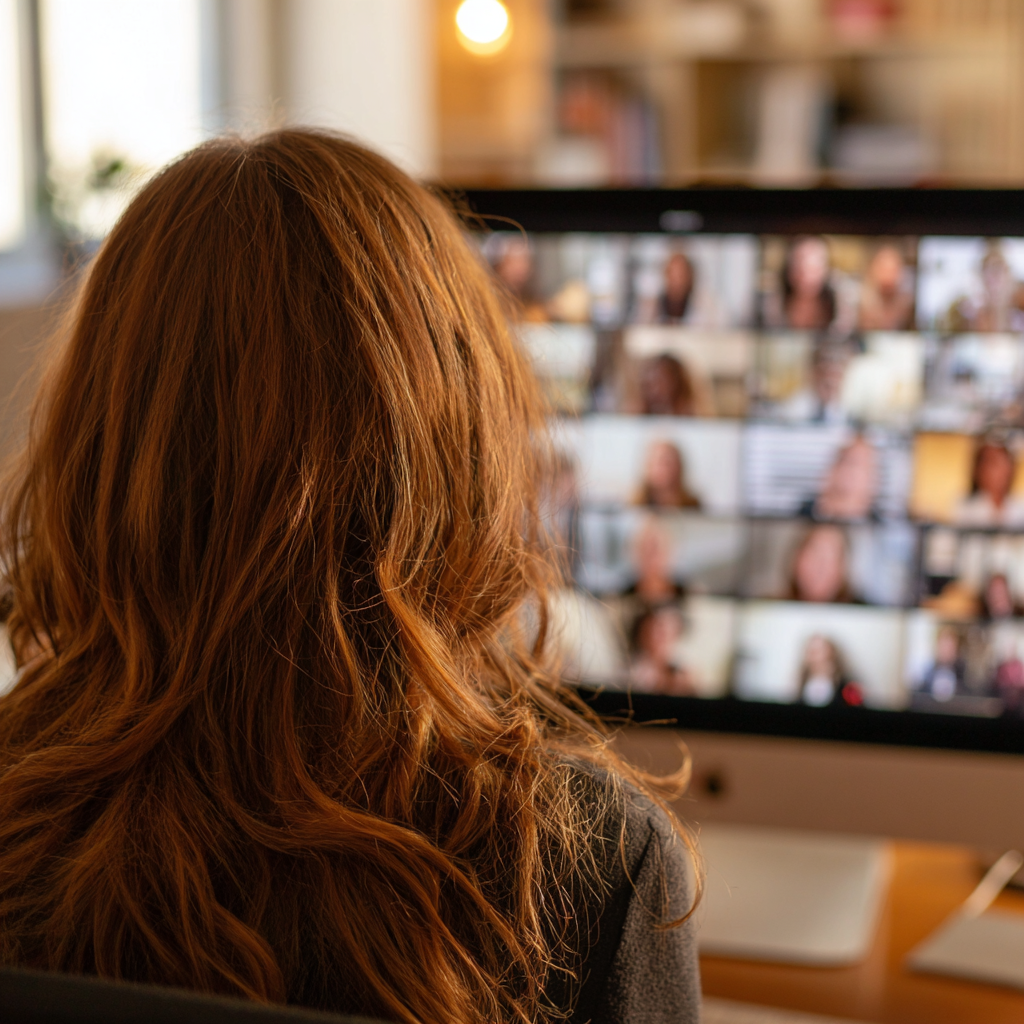
There’s lag. People talk over each other because the audio does its own thing. Eye contact is a myth. Body language is reduced to a postage stamp-sized shrug. And you never know if someone’s pausing to think, pausing because they’re finished, or pausing because their dog is auditioning for a disaster movie off-screen.
So people adapt.
Instead of just listening, part of your brain is now running a stopwatch. You start prepping your response while someone else is still mid-sentence, just to avoid missing the tiny window where you might actually get a word in. Pauses feel risky. Silence feels like handing over your spot in line.
And honestly, I think that changes the way people speak.
People start rushing thoughts that could’ve used a few more seconds in the oven. They over-explain the obvious, just in case they don’t get a second shot. And they fill every gap with ‘like,’ ‘umm,’ and ‘so’—verbal placeholders that let them keep their seat at the conversational table without actually saying anything new.
The weirdest part? I don’t think most people even notice they’re doing it anymore. It’s just become the background music.
What If The Adaptation Starts Becoming Real?
And over time, I do wonder if adapting to communication environments like this isn’t just making us sound less confident, but is actually affecting our confidence for real.
If you spend enough years being interrupted, rushed, talked over, or subtly taught that hesitation costs you your voice, does some part of you eventually stop trusting your thoughts as much?
Do you become less concise because you’re compensating?
Less direct because you’re cushioning?
Less confident because you’ve trained yourself to treat every pause like vulnerability?
I don’t know. Maybe.
But I do know I’m seeing more and more people talk like they’re flinching in advance—preparing for the interruption before it even arrives.
And I think leaders misread that constantly.
The fastest talker in the room isn’t always the sharpest thinker. The person who interrupts the most isn’t necessarily the most invested. And the quietest person? They might not be checked out—they might just be tired of trying to wedge thoughtful conversation into a space that treats speed like a virtue and reflection like a technical glitch.
That matters because communication environments eventually become decision-making environments.
If meetings keep rewarding urgency, quick-fire reactions, and nonstop chatter, people start optimizing for those things instead of actual insight. The folks who thrive on rapid-fire conversation take over, while the more reflective types fade into the background—not because they have less to offer, but because jumping into conversational dodgeball before 9am on a Tuesday is a sport they’d rather skip.
The Fix Is Probably Simpler Than We Think
And to be clear, I’m not anti-remote work. I actually love remote work. I love the flexibility. I love the accessibility. I love being able to work with talented people from all over the country without spending half my life commuting.
But I do think companies hit ‘adopt digital communication’ at warp speed, and then forgot to read the manual on how to actually manage it.
We packed our calendars with meetings, but forgot to set any ground rules for interruptions, pacing, pauses, or how to make sure the quieter folks still get a chance to think—and actually say something—before the next agenda item steamrolls in.
And honestly, some of the fixes are so simple it’s almost embarrassing we haven’t tried them yet.
Slow conversations down a little.
Let people finish their thought.
If someone gets cut off, bring them back into the conversation.
Stop treating silence like a technical error that needs to be filled immediately.
Sometimes silence just means someone is thinking.
And honestly, those are usually the voices you want to hear most—if only we’d give them the space.